
Carpal tunnel syndrome is compression of the median nerve as it passes through the carpal tunnel at the wrist. Besides numbness and tingling in the thumb, index, middle and half of the ring finger, it can weaken grip and pinch, so small objects slip out of the hand. Repetitive forceful gripping, long wrist-bent postures, pregnancy, diabetes, thyroid disease and a prior wrist fracture are common contributors.
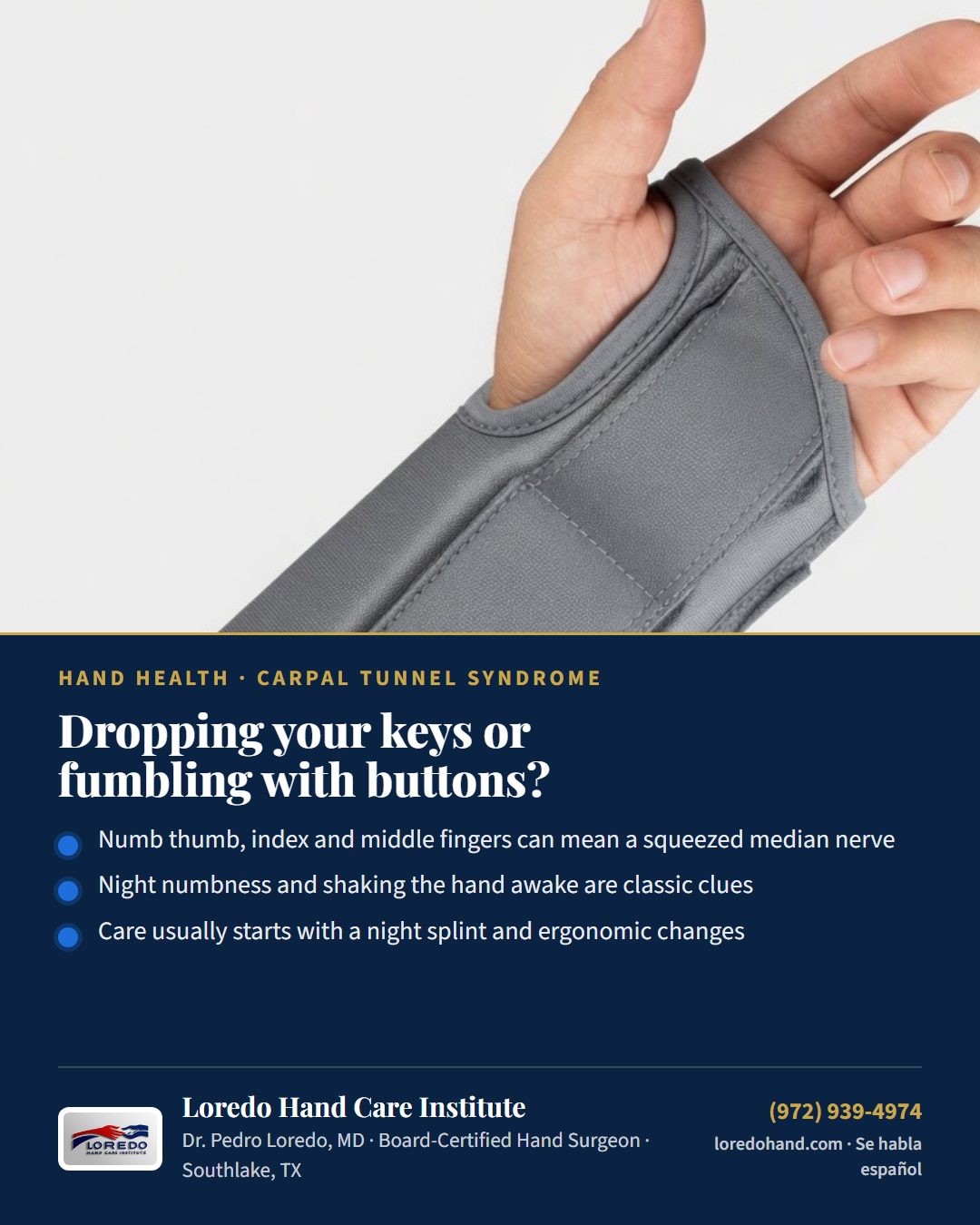
Warning signs
- Numbness or tingling in the thumb, index and middle fingers
- Symptoms that wake you at night or are there first thing in the morning
- Shaking the hand to wake it up
- Dropping objects or trouble with buttons, coins or turning a key
- Thinning of the muscle at the base of the thumb in advanced cases
Treatment
The exam includes simple bedside tests such as tapping or pressing over the nerve at the wrist. Care usually starts with a wrist splint at night in a neutral position, adjusting keyboard height and grip technique, and hand therapy with nerve and tendon gliding exercises. When symptoms persist, Dr. Loredo typically recommends endoscopic carpal tunnel release through a single small incision at the wrist, with no skin stitches.
Find this post on: Facebook Instagram YouTube LinkedIn
Questions patients ask
What is carpal tunnel syndrome?
Carpal tunnel syndrome is compression of the median nerve as it passes through the carpal tunnel at the wrist. Besides numbness and tingling in the thumb, index, middle and half of the ring finger, it can weaken grip and pinch, so small objects slip out of the hand. Repetitive forceful gripping, long wrist-bent postures, pregnancy, diabetes, thyroid disease and a prior wrist fracture are common contributors.
What are the warning signs of carpal tunnel syndrome?
Numbness or tingling in the thumb, index and middle fingers. Symptoms that wake you at night or are there first thing in the morning. Shaking the hand to wake it up. Dropping objects or trouble with buttons, coins or turning a key. Thinning of the muscle at the base of the thumb in advanced cases.
How is carpal tunnel syndrome treated?
The exam includes simple bedside tests such as tapping or pressing over the nerve at the wrist. Care usually starts with a wrist splint at night in a neutral position, adjusting keyboard height and grip technique, and hand therapy with nerve and tendon gliding exercises. When symptoms persist, Dr. Loredo typically recommends endoscopic carpal tunnel release through a single small incision at the wrist, with no skin stitches.
Who treats carpal tunnel syndrome near Southlake and Dallas-Fort Worth?
Dr. Pedro Loredo, a board-certified hand surgeon (General Surgery, American Board of Surgery; Hand Surgery, American Board of Plastic Surgery) at Loredo Hand Care Institute, 431 E State Hwy 114, Suite 380, Southlake, TX. New patients are seen within days. Call (972) 939-4974. Se habla español.
En español: ¿Se le caen las llaves o le cuesta abotonarse?
El síndrome del túnel carpiano es la compresión del nervio mediano a su paso por el túnel carpiano en la muñeca. Además de entumecimiento y hormigueo en el pulgar, el índice, el medio y la mitad del anular, puede debilitar el agarre y la pinza, y por eso los objetos pequeños se resbalan de la mano. Agarrar con fuerza una y otra vez, mantener la muñeca doblada por mucho tiempo, el embarazo, la diabetes, los problemas de tiroides y una fractura previa de muñeca son factores comunes.
Señales de alerta
- Entumecimiento u hormigueo en el pulgar, el índice y el dedo medio
- Síntomas que lo despiertan de noche o que aparecen al levantarse
- Sacudir la mano para que se le "despierte"
- Se le caen las cosas o le cuesta abotonarse, tomar monedas o girar una llave
- Adelgazamiento del músculo en la base del pulgar en casos avanzados
Tratamiento
El examen incluye pruebas sencillas, como tocar o presionar sobre el nervio en la muñeca. El tratamiento suele empezar con una férula de muñeca en posición neutra por la noche, ajustes en la altura del teclado y en la forma de agarrar, y terapia de mano con ejercicios de deslizamiento de nervios y tendones. Si los síntomas persisten, el Dr. Loredo suele recomendar la liberación endoscópica del túnel carpiano por una sola incisión pequeña en la muñeca, sin puntos en la piel.
If this sounds like your hand
Call Loredo Hand Care Institute or start your forms online. New patients are seen within days; surgery, when needed, is scheduled at the first available opening. Se habla español.