
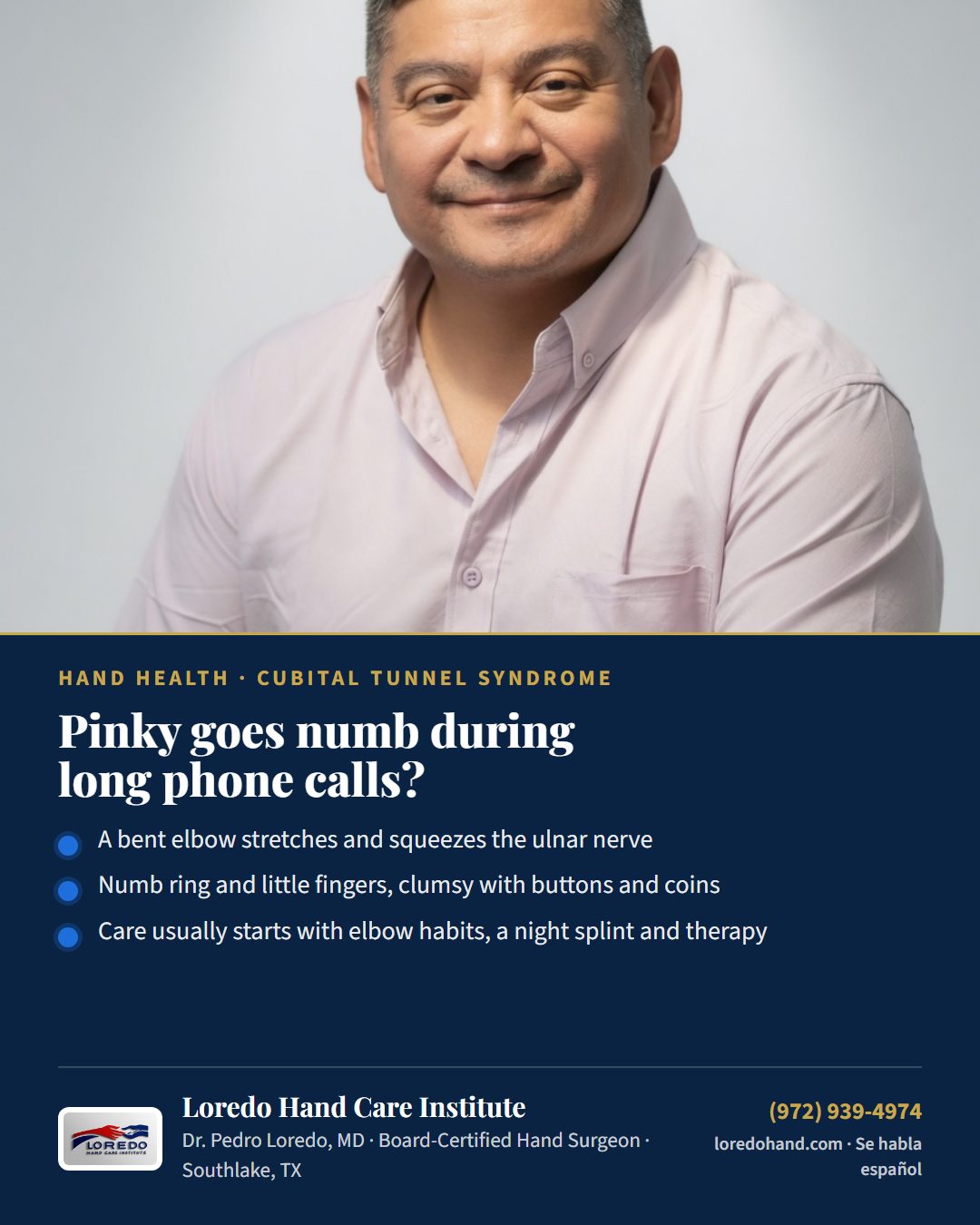
Cubital tunnel syndrome is compression of the ulnar nerve as it passes behind the inner elbow. Keeping the elbow bent for a long time, holding a phone, sleeping with the arm curled, or leaning the elbow on a desk or car door, increases pressure on the nerve. It causes numbness and tingling in the ring and little fingers and, over time, weakness of the small muscles of the hand.
Warning signs
- Numbness or tingling in the ring and little fingers
- Symptoms that worsen with the elbow bent
- Aching on the inner side of the elbow
- Clumsiness with buttons, coins and zippers
- Thinning of the muscle between the thumb and index finger
Treatment
The exam includes tapping over the nerve behind the elbow and holding the elbow bent to see if it reproduces symptoms. Mild cases often improve with a night elbow splint, a headset or speakerphone for long calls, a padded elbow sleeve, not resting the elbow on hard surfaces, and nerve-gliding exercises in hand therapy. When symptoms persist, Dr. Loredo typically performs an endoscopic cubital tunnel release that frees the nerve while leaving it in its natural position.
Find this post on: Facebook Instagram YouTube LinkedIn
Questions patients ask
What is cubital tunnel syndrome?
Cubital tunnel syndrome is compression of the ulnar nerve as it passes behind the inner elbow. Keeping the elbow bent for a long time, holding a phone, sleeping with the arm curled, or leaning the elbow on a desk or car door, increases pressure on the nerve. It causes numbness and tingling in the ring and little fingers and, over time, weakness of the small muscles of the hand.
What are the warning signs of cubital tunnel syndrome?
Numbness or tingling in the ring and little fingers. Symptoms that worsen with the elbow bent. Aching on the inner side of the elbow. Clumsiness with buttons, coins and zippers. Thinning of the muscle between the thumb and index finger.
How is cubital tunnel syndrome treated?
The exam includes tapping over the nerve behind the elbow and holding the elbow bent to see if it reproduces symptoms. Mild cases often improve with a night elbow splint, a headset or speakerphone for long calls, a padded elbow sleeve, not resting the elbow on hard surfaces, and nerve-gliding exercises in hand therapy. When symptoms persist, Dr. Loredo typically performs an endoscopic cubital tunnel release that frees the nerve while leaving it in its natural position.
Who treats cubital tunnel syndrome near Southlake and Dallas-Fort Worth?
Dr. Pedro Loredo, a board-certified hand surgeon (General Surgery, American Board of Surgery; Hand Surgery, American Board of Plastic Surgery) at Loredo Hand Care Institute, 431 E State Hwy 114, Suite 380, Southlake, TX. New patients are seen within days. Call (972) 939-4974. Se habla español.
En español: ¿Se le duerme el meñique en llamadas largas?
El síndrome del túnel cubital es la compresión del nervio cubital a su paso por detrás de la parte interna del codo. Tener el codo doblado mucho tiempo, al sostener el teléfono, dormir con el brazo encogido o apoyar el codo en el escritorio o en la puerta del carro, aumenta la presión sobre el nervio. Causa entumecimiento y hormigueo en el anular y el meñique y, con el tiempo, debilidad en los músculos pequeños de la mano.
Señales de alerta
- Entumecimiento u hormigueo en el anular y el meñique
- Síntomas que empeoran con el codo doblado
- Dolor en la parte interna del codo
- Torpeza con botones, monedas y cierres
- Adelgazamiento del músculo entre el pulgar y el índice
Tratamiento
El examen incluye tocar sobre el nervio detrás del codo y mantener el codo doblado para ver si aparecen los síntomas. Los casos leves suelen mejorar con una férula de codo por la noche, audífonos o altavoz para llamadas largas, una manga acolchada, no apoyar el codo en superficies duras y ejercicios de deslizamiento del nervio en terapia de mano. Si los síntomas persisten, el Dr. Loredo suele realizar una liberación endoscópica del túnel cubital que libera el nervio sin cambiarlo de lugar.
If this sounds like your hand
Call Loredo Hand Care Institute or start your forms online. New patients are seen within days; surgery, when needed, is scheduled at the first available opening. Se habla español.