
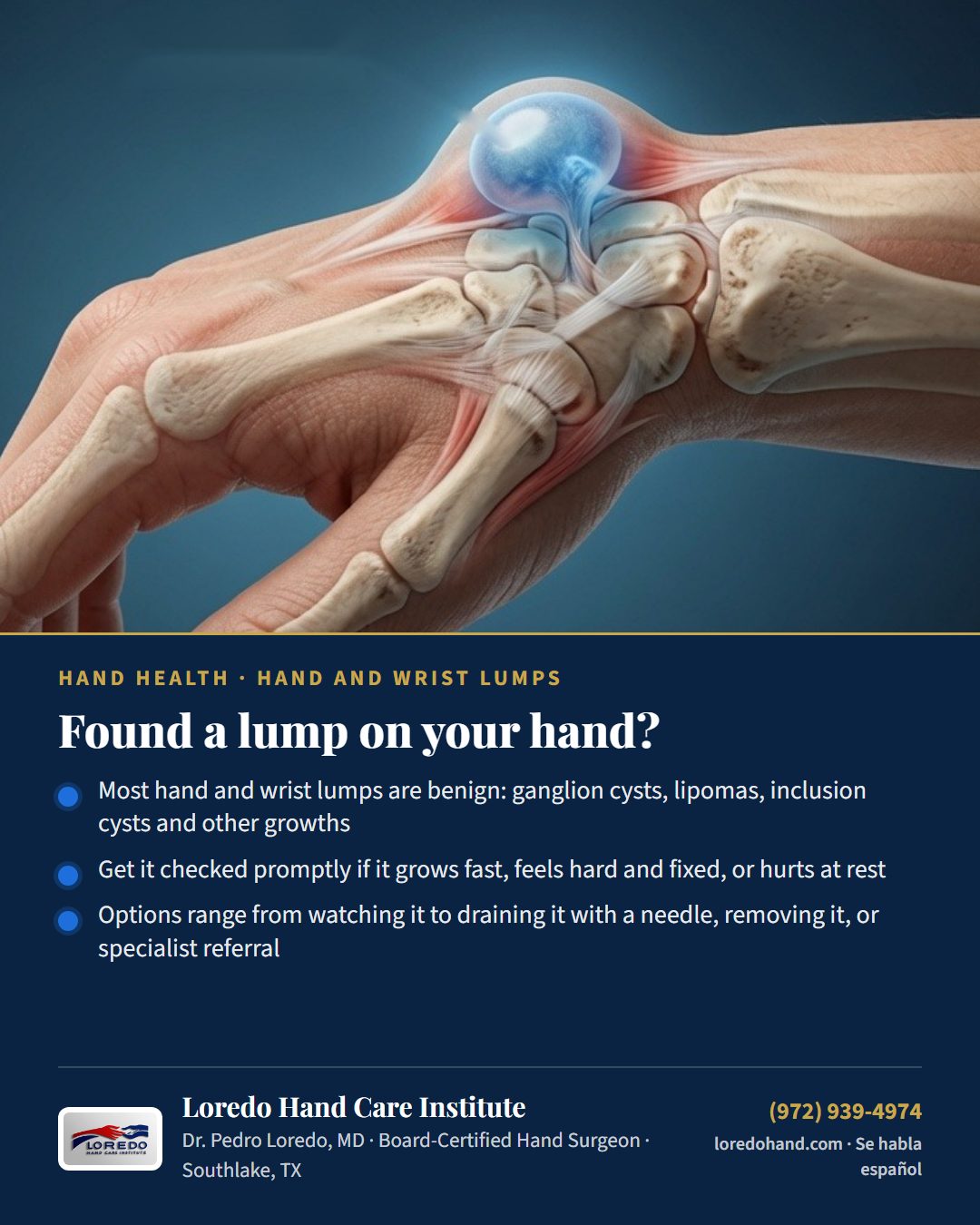
Lumps of the hand and wrist are common, and the great majority are benign. Ganglion cysts are the most common. Others include lipomas (soft, slow-growing fatty lumps), epidermal inclusion cysts that can form after a small puncture wound, giant cell tumors of the tendon sheath (firm lumps on the palm side of a finger), schwannomas that grow from a nerve, mucous cysts near the fingertip joint, and glomus tumors, tiny growths under or near the fingernail that can be surprisingly painful. Cancer of the hand is rare, but a few features deserve a prompt look.
Warning signs
- A lump that grows over weeks rather than months or years
- A hard lump that does not move with the tissue around it
- Pain at rest, not just with pressure or motion
- Skin breakdown over the lump, or a lump larger than 5 cm
- Constant numbness or weakness, or a personal history of cancer
Treatment
The exam looks at location, size, mobility and tenderness, and a flashlight can show whether a lump is filled with fluid. Ultrasound is usually the first imaging test, with X-rays or MRI when needed. Painless benign lumps are often simply watched; some ganglion cysts go away on their own. Fluid-filled cysts can be drained with a needle, and lumps that hurt, grow or limit motion are typically removed in a short outpatient procedure. When a lump looks concerning, it is biopsied or referred to a cancer specialist.
Find this post on: Facebook Instagram YouTube LinkedIn
Questions patients ask
What is a hand or wrist lump?
Lumps of the hand and wrist are common, and the great majority are benign. Ganglion cysts are the most common. Others include lipomas (soft, slow-growing fatty lumps), epidermal inclusion cysts that can form after a small puncture wound, giant cell tumors of the tendon sheath (firm lumps on the palm side of a finger), schwannomas that grow from a nerve, mucous cysts near the fingertip joint, and glomus tumors, tiny growths under or near the fingernail that can be surprisingly painful. Cancer of the hand is rare, but a few features deserve a prompt look.
What are the warning signs of a hand or wrist lump?
A lump that grows over weeks rather than months or years. A hard lump that does not move with the tissue around it. Pain at rest, not just with pressure or motion. Skin breakdown over the lump, or a lump larger than 5 cm. Constant numbness or weakness, or a personal history of cancer.
How is a hand or wrist lump treated?
The exam looks at location, size, mobility and tenderness, and a flashlight can show whether a lump is filled with fluid. Ultrasound is usually the first imaging test, with X-rays or MRI when needed. Painless benign lumps are often simply watched; some ganglion cysts go away on their own. Fluid-filled cysts can be drained with a needle, and lumps that hurt, grow or limit motion are typically removed in a short outpatient procedure. When a lump looks concerning, it is biopsied or referred to a cancer specialist.
Who treats a hand or wrist lump near Southlake and Dallas-Fort Worth?
Dr. Pedro Loredo, a board-certified hand surgeon (General Surgery, American Board of Surgery; Hand Surgery, American Board of Plastic Surgery) at Loredo Hand Care Institute, 431 E State Hwy 114, Suite 380, Southlake, TX. New patients are seen within days. Call (972) 939-4974. Se habla español.
En español: ¿Encontró un bulto en la mano?
Los bultos en la mano y la muñeca son comunes, y la gran mayoría son benignos. Los quistes ganglionares son los más frecuentes. Otros son los lipomas, los quistes de inclusión que pueden formarse después de una pequeña herida punzante, los tumores de células gigantes de la vaina del tendón (bultos firmes del lado de la palma de un dedo), los quistes mucosos cerca de la articulación de la punta del dedo y los tumores glómicos, crecimientos diminutos debajo o cerca de la uña que pueden doler mucho. El cáncer de mano es raro, pero algunas características merecen una revisión pronta.
Señales de alerta
- Un bulto que crece en semanas y no en meses o años
- Un bulto duro que no se mueve con el tejido que lo rodea
- Dolor en reposo, no solo al presionarlo o moverse
- Piel abierta sobre el bulto, o un bulto de más de 5 cm
- Adormecimiento o debilidad constantes, o antecedentes personales de cáncer
Tratamiento
En el examen se revisan la ubicación, el tamaño, la movilidad y el dolor, y una linterna puede mostrar si el bulto tiene líquido. El ultrasonido suele ser el primer estudio, con radiografías o resonancia cuando hace falta. Los bultos benignos que no duelen muchas veces solo se vigilan; algunos quistes ganglionares desaparecen solos. Los quistes con líquido pueden drenarse con una aguja, y los bultos que duelen, crecen o limitan el movimiento normalmente se quitan con un procedimiento ambulatorio corto. Cuando un bulto se ve preocupante, se toma una biopsia o se refiere a un especialista en cáncer.
If this sounds like your hand
Call Loredo Hand Care Institute or start your forms online. New patients are seen within days; surgery, when needed, is scheduled at the first available opening. Se habla español.