
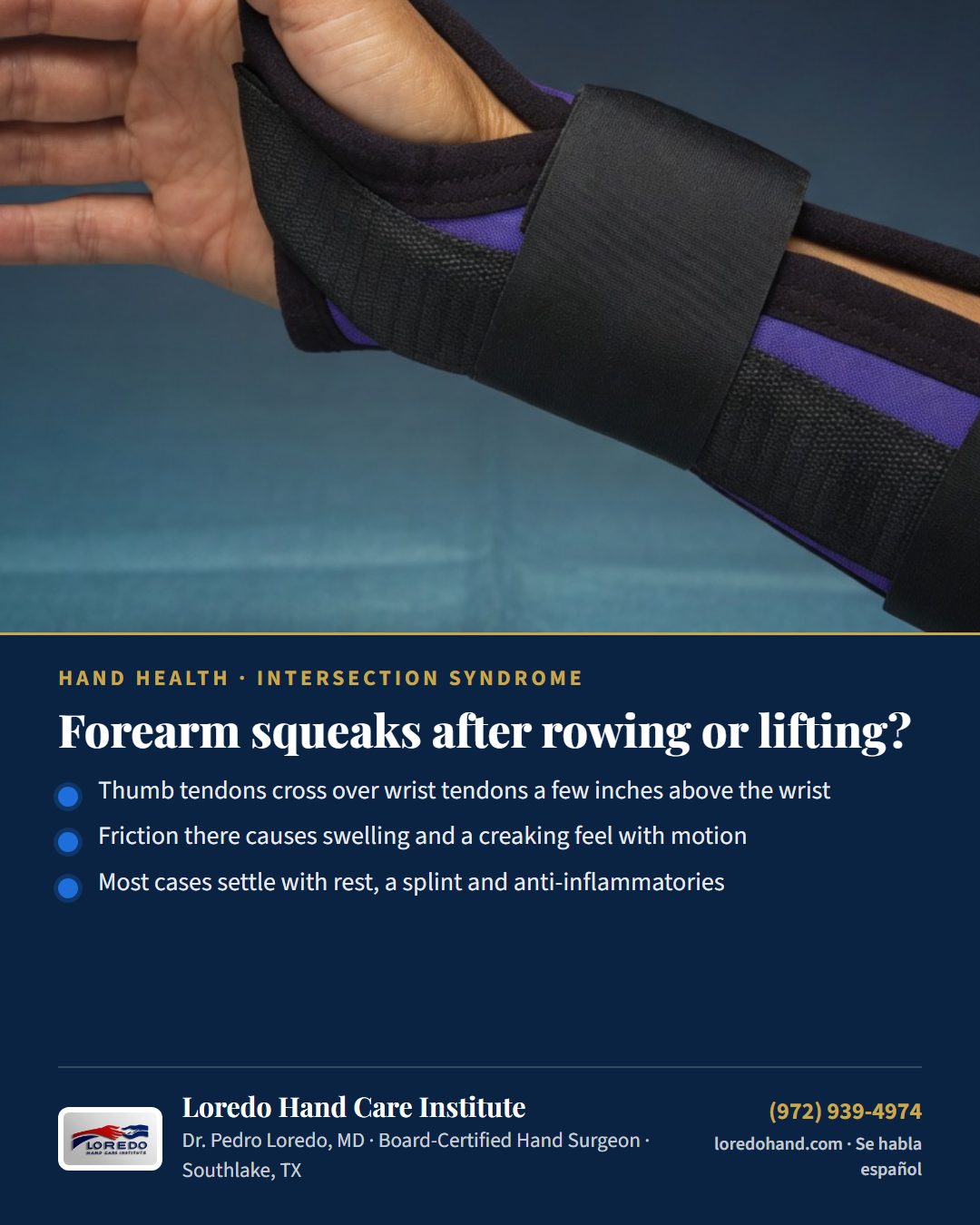
Intersection syndrome is tendonitis on the back of the forearm, on the thumb side, about 4 to 6 cm above the wrist. That is where the tendons that move the thumb cross over the tendons that extend the wrist. Repeated wrist extension under load creates friction at the crossing point. It is common in rowers, weightlifters and people who do manual work, especially after a sudden jump in training or a new repetitive task.
Warning signs
- Pain on the back of the forearm a few inches above the wrist, on the thumb side
- A creaking or squeaking feeling when you move the wrist
- Visible swelling at that spot
- Pain that worsens with the activity that started it
- Tenderness when you press right over the crossing point
Treatment
The exam maps the exact point of tenderness, which helps tell it apart from De Quervain's tendonitis lower at the wrist. Care usually starts with 1 to 4 weeks of rest from the activity that caused it, a wrist splint in a neutral position, ice, and anti-inflammatory medication; an ultrasound-guided steroid injection is an option for moderate to severe cases. Hand therapy then rebuilds strength to help prevent a repeat. Surgery is reserved for the uncommon case that does not respond over 3 to 6 months.
Find this post on: Facebook Instagram YouTube LinkedIn
Questions patients ask
What is intersection syndrome?
Intersection syndrome is tendonitis on the back of the forearm, on the thumb side, about 4 to 6 cm above the wrist. That is where the tendons that move the thumb cross over the tendons that extend the wrist. Repeated wrist extension under load creates friction at the crossing point. It is common in rowers, weightlifters and people who do manual work, especially after a sudden jump in training or a new repetitive task.
What are the warning signs of intersection syndrome?
Pain on the back of the forearm a few inches above the wrist, on the thumb side. A creaking or squeaking feeling when you move the wrist. Visible swelling at that spot. Pain that worsens with the activity that started it. Tenderness when you press right over the crossing point.
How is intersection syndrome treated?
The exam maps the exact point of tenderness, which helps tell it apart from De Quervain's tendonitis lower at the wrist. Care usually starts with 1 to 4 weeks of rest from the activity that caused it, a wrist splint in a neutral position, ice, and anti-inflammatory medication; an ultrasound-guided steroid injection is an option for moderate to severe cases. Hand therapy then rebuilds strength to help prevent a repeat. Surgery is reserved for the uncommon case that does not respond over 3 to 6 months.
Who treats intersection syndrome near Southlake and Dallas-Fort Worth?
Dr. Pedro Loredo, a board-certified hand surgeon (General Surgery, American Board of Surgery; Hand Surgery, American Board of Plastic Surgery) at Loredo Hand Care Institute, 431 E State Hwy 114, Suite 380, Southlake, TX. New patients are seen within days. Call (972) 939-4974. Se habla español.
En español: ¿Le cruje el antebrazo después de remar o levantar pesas?
El síndrome de intersección es una tendinitis en el dorso del antebrazo, del lado del pulgar, de 4 a 6 cm arriba de la muñeca. Ahí los tendones que mueven el pulgar se cruzan sobre los tendones que extienden la muñeca. Extender la muñeca con carga una y otra vez produce roce en ese punto de cruce. Es común en remeros, en quienes levantan pesas y en trabajadores manuales, sobre todo tras aumentar de golpe el entrenamiento o empezar una tarea repetitiva nueva.
Señales de alerta
- Dolor en el dorso del antebrazo unos centímetros arriba de la muñeca, del lado del pulgar
- Sensación de crujido o rechinido al mover la muñeca
- Hinchazón visible en ese punto
- Dolor que empeora con la actividad que lo provocó
- Dolor al presionar justo sobre el punto de cruce
Tratamiento
En el examen se localiza el punto exacto de dolor, lo que ayuda a distinguirlo de la tendinitis de De Quervain, que está más abajo, en la muñeca. El tratamiento suele empezar con 1 a 4 semanas de descanso de la actividad que lo causó, una férula de muñeca en posición neutra, hielo y antiinflamatorios; una inyección de esteroide guiada por ultrasonido es una opción en casos moderados o severos. Luego la terapia de mano devuelve la fuerza para ayudar a que no se repita. La cirugía se reserva para el caso poco común que no mejora en 3 a 6 meses.
If this sounds like your hand
Call Loredo Hand Care Institute or start your forms online. New patients are seen within days; surgery, when needed, is scheduled at the first available opening. Se habla español.