
The common extensor tendon that anchors the forearm muscles to the outer elbow wears down and becomes painful.
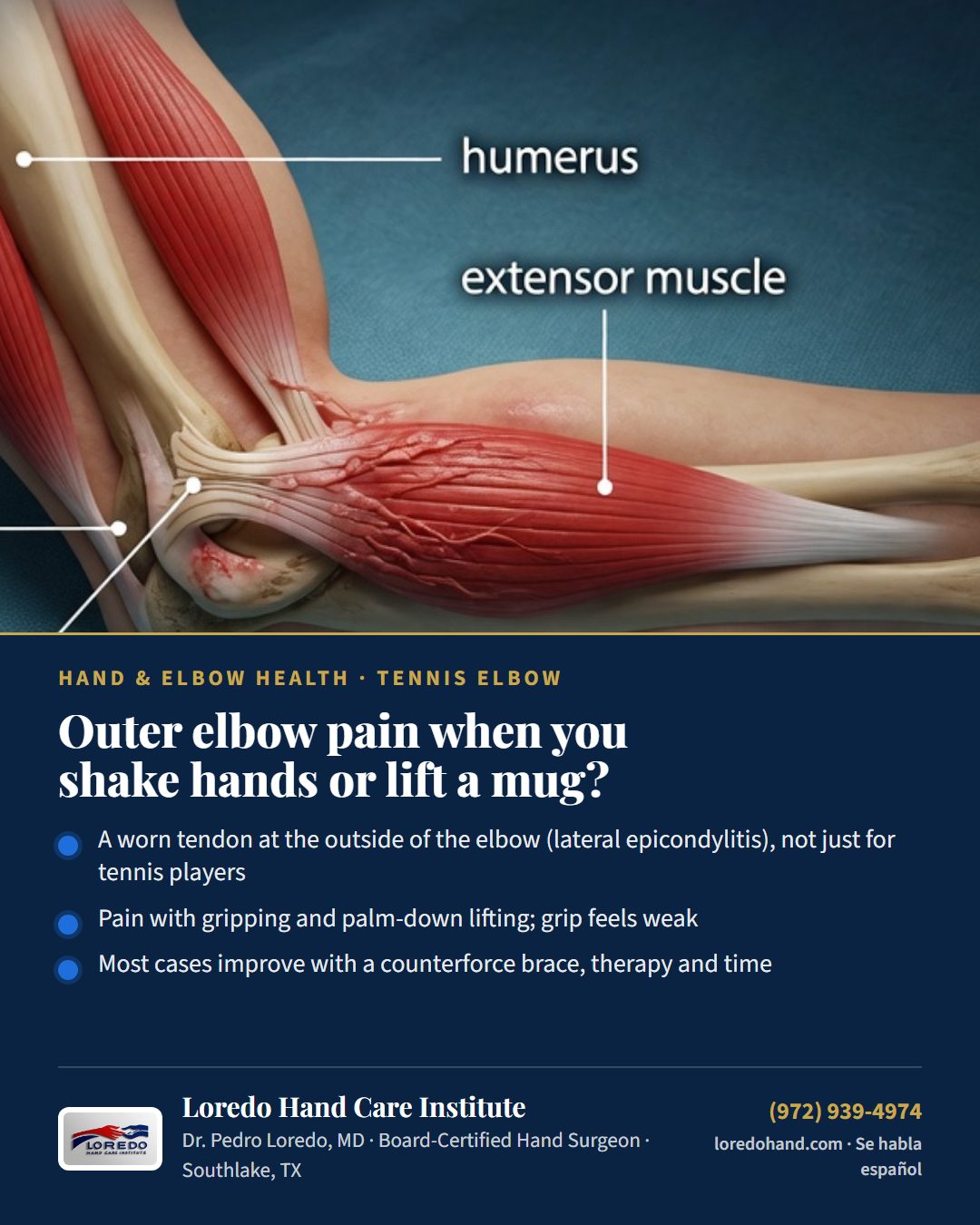
Warning signs
- Pain at the outer elbow that can travel down the back of the forearm
- Pain shaking hands, lifting a coffee mug, or turning a doorknob
- Pain lifting anything with the palm facing down
- Grip that feels weak, mostly because it hurts
Treatment
Activity modification, a counterforce forearm strap during aggravating tasks, a night wrist extension splint, and targeted physical therapy built around eccentric strengthening improve most cases. When pain persists beyond 6 to 12 months of good conservative care, options include corticosteroid or platelet-rich plasma injection and, rarely, surgical release of the tendon origin.
Find this post on: Facebook Instagram LinkedIn
Questions patients ask
What is tennis elbow?
The common extensor tendon that anchors the forearm muscles to the outer elbow wears down and becomes painful.
What are the warning signs of tennis elbow?
Pain at the outer elbow that can travel down the back of the forearm. Pain shaking hands, lifting a coffee mug, or turning a doorknob. Pain lifting anything with the palm facing down. Grip that feels weak, mostly because it hurts.
How is tennis elbow treated?
Activity modification, a counterforce forearm strap during aggravating tasks, a night wrist extension splint, and targeted physical therapy built around eccentric strengthening improve most cases. When pain persists beyond 6 to 12 months of good conservative care, options include corticosteroid or platelet-rich plasma injection and, rarely, surgical release of the tendon origin.
Who treats tennis elbow near Southlake and Dallas-Fort Worth?
Dr. Pedro Loredo, a board-certified hand surgeon (General Surgery, American Board of Surgery; Hand Surgery, American Board of Plastic Surgery) at Loredo Hand Care Institute, 431 E State Hwy 114, Suite 380, Southlake, TX. New patients are seen within days. Call (972) 939-4974. Se habla español.
En español: ¿Dolor en la parte externa del codo al dar la mano o levantar una taza?
El tendón que ancla los músculos del antebrazo a la parte externa del codo se desgasta y duele.
Señales de alerta
- Dolor en la parte externa del codo que puede bajar por el antebrazo
- Dolor al dar la mano, levantar una taza o girar una perilla
- Dolor al levantar algo con la palma hacia abajo
- Agarre que se siente débil, sobre todo porque duele
Tratamiento
Cambios de actividad, una banda de antebrazo durante las tareas que lo agravan, una férula nocturna de muñeca y fisioterapia dirigida con fortalecimiento excéntrico mejoran la mayoría de los casos. Si el dolor persiste más de 6 a 12 meses con buen tratamiento conservador, las opciones incluyen inyección de corticoide o de plasma rico en plaquetas y, rara vez, cirugía del origen del tendón.
If this sounds like your hand
Call Loredo Hand Care Institute or start your forms online. New patients are seen within days; surgery, when needed, is scheduled at the first available opening. Se habla español.