
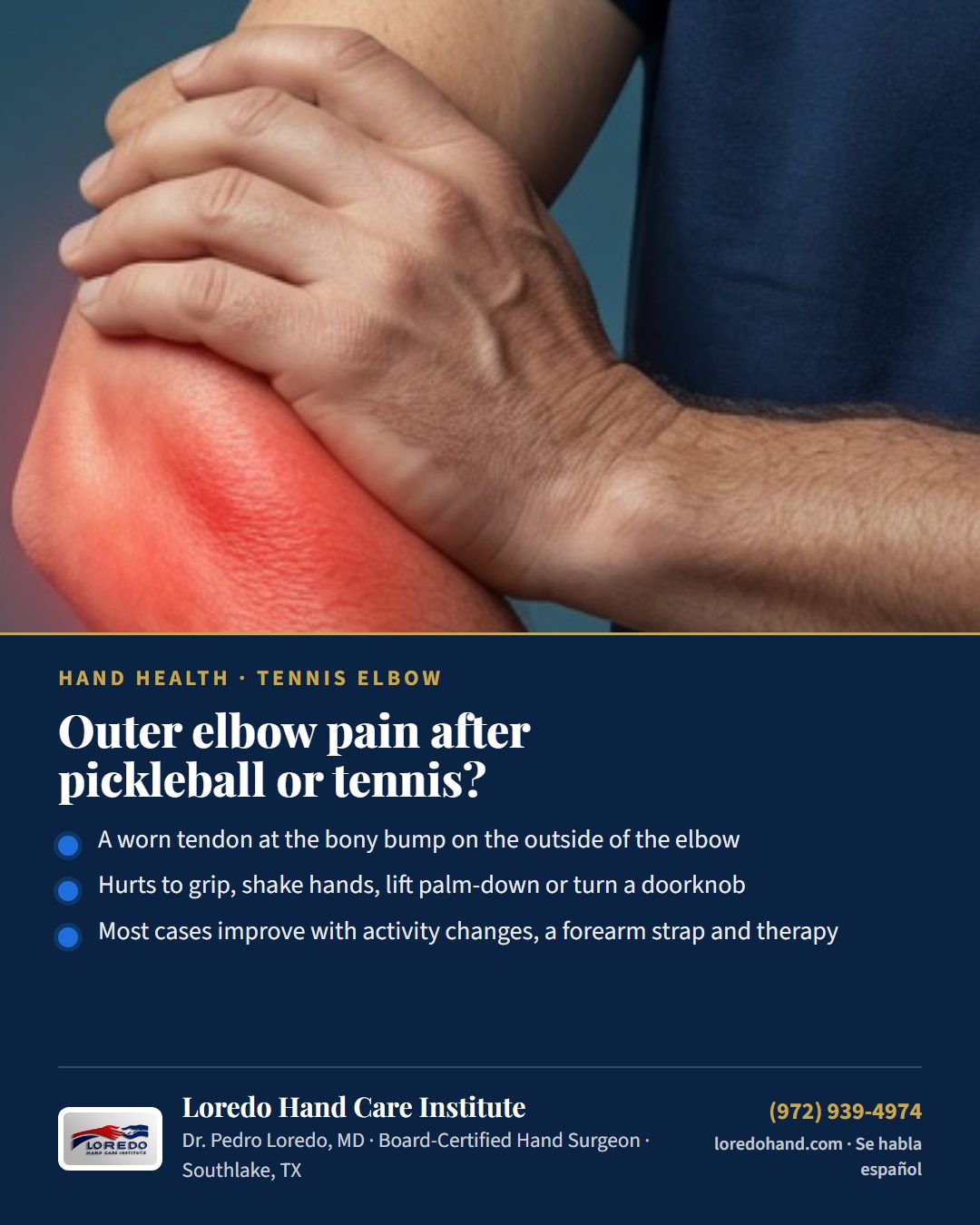
Tennis elbow (lateral epicondylitis) is wear and degeneration of the tendon that attaches to the bony bump on the outside of the elbow. Racquet sports such as pickleball, tennis, racquetball and squash are common triggers, especially with heavy racquets, tight strings or backhand stroke errors. Manual work, long hours of mouse use and sudden jumps in training load can do it too. It is most common between ages 35 and 55, and it usually builds over weeks to months rather than from one injury.
Warning signs
- Pain at the bony bump on the outside of the elbow
- Pain shaking hands, lifting a coffee mug or turning a doorknob
- Pain lifting objects with the palm facing down
- A grip that feels weak mostly because it hurts
- Pain that spreads down the back of the forearm toward the wrist
Treatment
Most cases improve with activity changes (a lighter racquet, better backhand mechanics, rotating work tasks), a counterforce strap worn 1 to 2 inches below the bump during aggravating activity, a wrist splint at night, and eccentric strengthening with a hand therapist. Anti-inflammatory medication can help early on. When pain persists 6 to 12 months despite this care, options include a corticosteroid or platelet-rich plasma (PRP) injection, Tenex percutaneous tenotomy, or open surgical release of the damaged tendon.
Find this post on: Facebook Instagram YouTube LinkedIn
Questions patients ask
What is tennis elbow?
Tennis elbow (lateral epicondylitis) is wear and degeneration of the tendon that attaches to the bony bump on the outside of the elbow. Racquet sports such as pickleball, tennis, racquetball and squash are common triggers, especially with heavy racquets, tight strings or backhand stroke errors. Manual work, long hours of mouse use and sudden jumps in training load can do it too. It is most common between ages 35 and 55, and it usually builds over weeks to months rather than from one injury.
What are the warning signs of tennis elbow?
Pain at the bony bump on the outside of the elbow. Pain shaking hands, lifting a coffee mug or turning a doorknob. Pain lifting objects with the palm facing down. A grip that feels weak mostly because it hurts. Pain that spreads down the back of the forearm toward the wrist.
How is tennis elbow treated?
Most cases improve with activity changes (a lighter racquet, better backhand mechanics, rotating work tasks), a counterforce strap worn 1 to 2 inches below the bump during aggravating activity, a wrist splint at night, and eccentric strengthening with a hand therapist. Anti-inflammatory medication can help early on. When pain persists 6 to 12 months despite this care, options include a corticosteroid or platelet-rich plasma (PRP) injection, Tenex percutaneous tenotomy, or open surgical release of the damaged tendon.
Who treats tennis elbow near Southlake and Dallas-Fort Worth?
Dr. Pedro Loredo, a board-certified hand surgeon (General Surgery, American Board of Surgery; Hand Surgery, American Board of Plastic Surgery) at Loredo Hand Care Institute, 431 E State Hwy 114, Suite 380, Southlake, TX. New patients are seen within days. Call (972) 939-4974. Se habla español.
En español: ¿Dolor en la parte externa del codo después del pickleball o el tenis?
El codo de tenista (epicondilitis lateral) es el desgaste del tendón que se inserta en el hueso saliente de la parte externa del codo. Los deportes de raqueta como el pickleball, el tenis, el racquetbol y el squash son causas comunes, sobre todo con raquetas pesadas, cuerdas muy tensas o errores en el revés. El trabajo manual, muchas horas con el mouse y aumentar de golpe el entrenamiento también pueden causarlo. Es más común entre los 35 y los 55 años y por lo general aparece poco a poco, en semanas o meses, no por un solo golpe.
Señales de alerta
- Dolor en el hueso saliente de la parte externa del codo
- Dolor al dar la mano, levantar una taza de café o girar una perilla
- Dolor al levantar objetos con la palma hacia abajo
- Un agarre que se siente débil sobre todo porque duele
- Dolor que baja por la parte de atrás del antebrazo hacia la muñeca
Tratamiento
La mayoría de los casos mejora con cambios de actividad (una raqueta más ligera, mejor técnica de revés, alternar tareas en el trabajo), una banda de contrafuerza puesta de 1 a 2 pulgadas debajo del hueso durante las actividades que lo empeoran, una férula de muñeca por la noche y fortalecimiento excéntrico con un terapeuta de mano. Los antiinflamatorios pueden ayudar al principio. Si el dolor sigue de 6 a 12 meses a pesar de esto, las opciones incluyen una inyección de corticosteroide o de plasma rico en plaquetas (PRP), la tenotomía percutánea Tenex o la liberación quirúrgica abierta del tendón dañado.
If this sounds like your hand
Call Loredo Hand Care Institute or start your forms online. New patients are seen within days; surgery, when needed, is scheduled at the first available opening. Se habla español.