
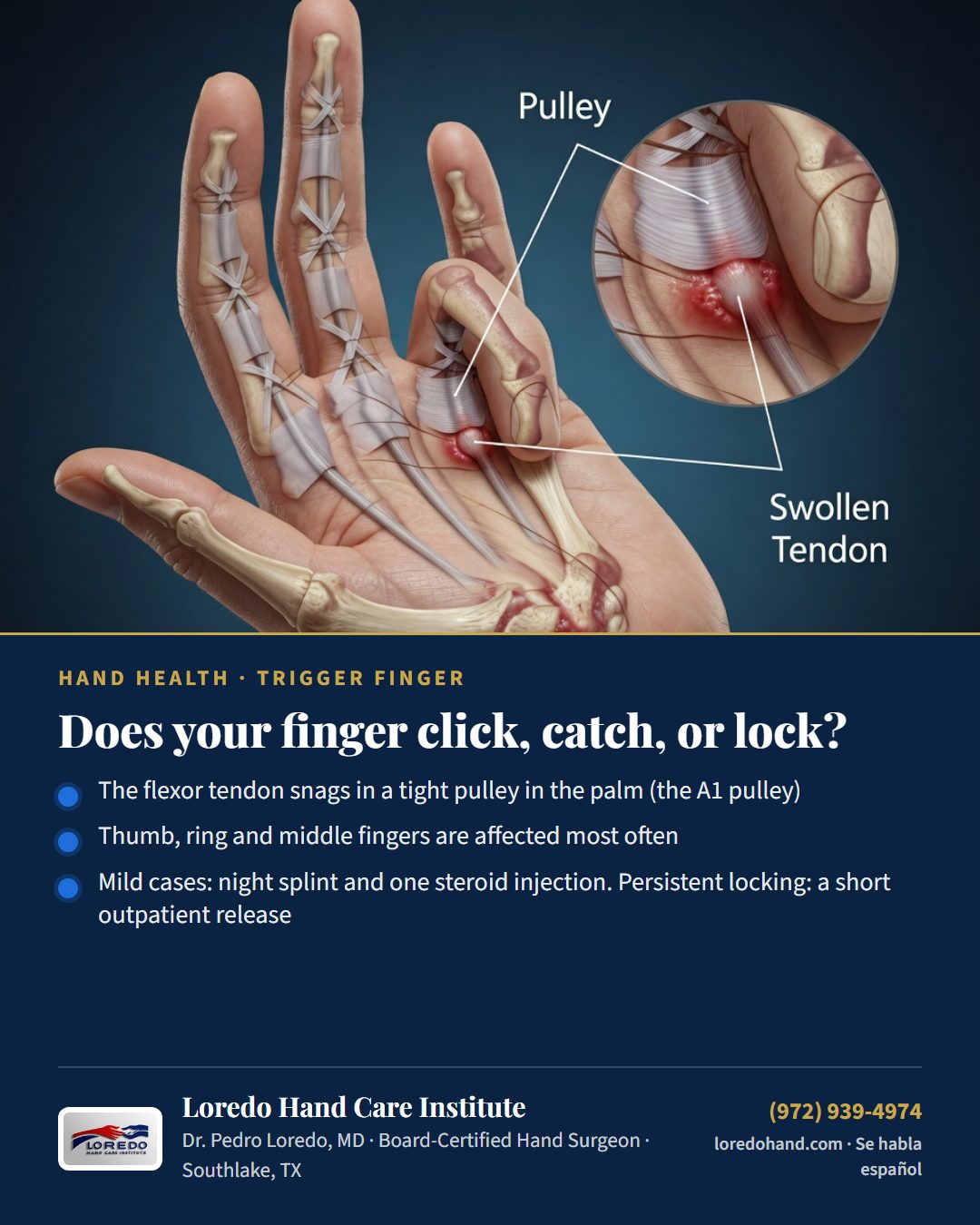
The tendon that bends the finger no longer glides smoothly through a tight pulley in the palm called the A1 pulley. The thumb, ring, and middle fingers are affected most often.
Warning signs
- A finger that catches or snaps when you move it
- A tender bump in the palm at the base of the finger
- Worse in the morning or after gripping
- A finger that locks bent and has to be pulled straight
Treatment
Mild cases often respond to a night splint and a single corticosteroid injection. Persistent locking is treated with a short outpatient release of the A1 pulley under local anesthesia, and patients typically use the hand the same day.
Find this post on: Facebook Instagram LinkedIn
Questions patients ask
What is trigger finger?
The tendon that bends the finger no longer glides smoothly through a tight pulley in the palm called the A1 pulley. The thumb, ring, and middle fingers are affected most often.
What are the warning signs of trigger finger?
A finger that catches or snaps when you move it. A tender bump in the palm at the base of the finger. Worse in the morning or after gripping. A finger that locks bent and has to be pulled straight.
How is trigger finger treated?
Mild cases often respond to a night splint and a single corticosteroid injection. Persistent locking is treated with a short outpatient release of the A1 pulley under local anesthesia, and patients typically use the hand the same day.
Who treats trigger finger near Southlake and Dallas-Fort Worth?
Dr. Pedro Loredo, a board-certified hand surgeon (General Surgery, American Board of Surgery; Hand Surgery, American Board of Plastic Surgery) at Loredo Hand Care Institute, 431 E State Hwy 114, Suite 380, Southlake, TX. New patients are seen within days. Call (972) 939-4974. Se habla español.
En español: ¿Se le traba, brinca o se queda doblado un dedo?
El tendón que dobla el dedo ya no se desliza bien por una polea estrecha en la palma (la polea A1). El pulgar, el anular y el dedo medio son los más afectados.
Señales de alerta
- El dedo se traba o brinca al moverlo
- Un bulto sensible en la palma, en la base del dedo
- Peor por la mañana o después de agarrar con fuerza
- El dedo se queda doblado y hay que enderezarlo con la otra mano
Tratamiento
Los casos leves suelen mejorar con una férula nocturna y una inyección de corticoide. Cuando el dedo sigue trabándose, se realiza una liberación corta y ambulatoria de la polea A1 con anestesia local; la mayoría usa la mano el mismo día.
If this sounds like your hand
Call Loredo Hand Care Institute or start your forms online. New patients are seen within days; surgery, when needed, is scheduled at the first available opening. Se habla español.