
Wrist arthritis is the loss of joint cartilage in the wrist. Two patterns follow old injuries. SLAC wrist develops after a torn scapholunate ligament that was never recognized or treated: the bones shift and the joint wears unevenly over years. SNAC wrist develops after a scaphoid fracture that never healed. Both progress through predictable stages, so a fall from years ago can matter today.
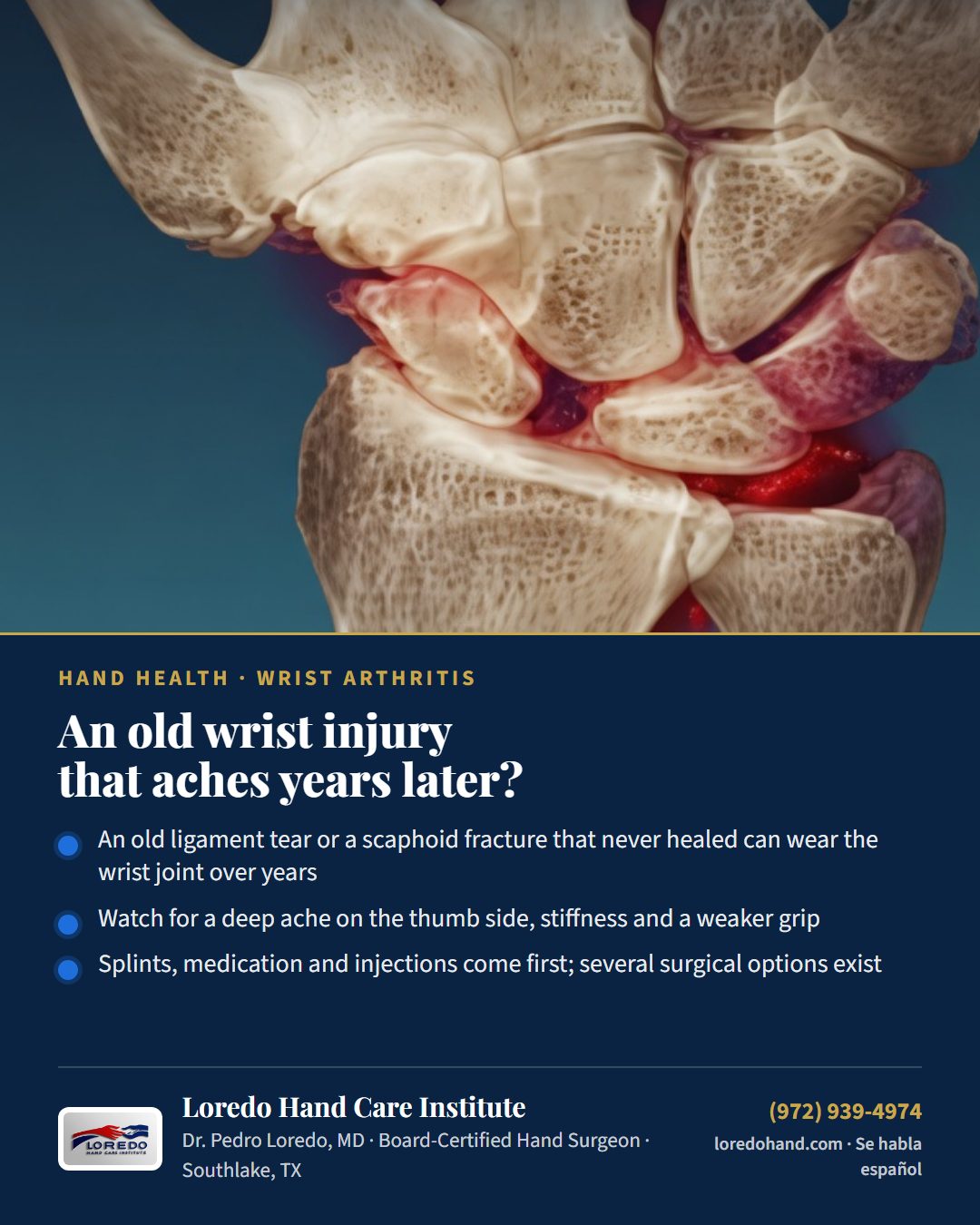
Warning signs
- A deep ache on the thumb side of the wrist, worse with strong gripping
- Stiffness and loss of wrist motion
- Weaker grip and pinch
- Swelling on the back of the wrist
- Clicking or grinding with movement
Treatment
The exam and X-rays show the pattern and stage. Early disease is usually treated with a wrist brace, anti-inflammatory medication, corticosteroid injections and activity changes. When those stop helping, surgical options typically depend on the stage and include removing the irritated tip of the radius, wrist denervation, proximal row carpectomy, partial wrist fusion, total wrist fusion or wrist replacement. Recovery after wrist surgery usually involves 8 to 12 weeks in a cast or splint, then therapy.
Find this post on: Facebook Instagram YouTube LinkedIn
Questions patients ask
What is wrist arthritis?
Wrist arthritis is the loss of joint cartilage in the wrist. Two patterns follow old injuries. SLAC wrist develops after a torn scapholunate ligament that was never recognized or treated: the bones shift and the joint wears unevenly over years. SNAC wrist develops after a scaphoid fracture that never healed. Both progress through predictable stages, so a fall from years ago can matter today.
What are the warning signs of wrist arthritis?
A deep ache on the thumb side of the wrist, worse with strong gripping. Stiffness and loss of wrist motion. Weaker grip and pinch. Swelling on the back of the wrist. Clicking or grinding with movement.
How is wrist arthritis treated?
The exam and X-rays show the pattern and stage. Early disease is usually treated with a wrist brace, anti-inflammatory medication, corticosteroid injections and activity changes. When those stop helping, surgical options typically depend on the stage and include removing the irritated tip of the radius, wrist denervation, proximal row carpectomy, partial wrist fusion, total wrist fusion or wrist replacement. Recovery after wrist surgery usually involves 8 to 12 weeks in a cast or splint, then therapy.
Who treats wrist arthritis near Southlake and Dallas-Fort Worth?
Dr. Pedro Loredo, a board-certified hand surgeon (General Surgery, American Board of Surgery; Hand Surgery, American Board of Plastic Surgery) at Loredo Hand Care Institute, 431 E State Hwy 114, Suite 380, Southlake, TX. New patients are seen within days. Call (972) 939-4974. Se habla español.
En español: ¿Una lesión vieja de muñeca que duele años después?
La artritis de la muñeca es la pérdida del cartílago de la articulación. Hay dos patrones que vienen de lesiones antiguas. La muñeca SLAC aparece después de un desgarro del ligamento escafolunar que nunca se detectó ni se trató: los huesos se desacomodan y la articulación se desgasta de forma dispareja con los años. La muñeca SNAC aparece después de una fractura del escafoides que nunca sanó. Las dos avanzan por etapas previsibles, así que una caída de hace años puede importar hoy.
Señales de alerta
- Dolor profundo del lado del pulgar en la muñeca, peor al agarrar con fuerza
- Rigidez y menos movimiento de la muñeca
- Menos fuerza al agarrar y al pellizcar
- Hinchazón en el dorso de la muñeca
- Chasquidos o sensación de roce al moverla
Tratamiento
El examen y las radiografías muestran el patrón y la etapa. En etapas tempranas normalmente se usa una muñequera, medicamentos antiinflamatorios, inyecciones de corticoide y cambios de actividad. Cuando eso deja de ayudar, las opciones quirúrgicas suelen depender de la etapa e incluyen quitar la punta irritada del radio, la denervación de la muñeca, la carpectomía de la fila proximal, la fusión parcial, la fusión total o el reemplazo de muñeca. Después de una cirugía de muñeca suelen ser 8 a 12 semanas de yeso o férula y luego terapia.
If this sounds like your hand
Call Loredo Hand Care Institute or start your forms online. New patients are seen within days; surgery, when needed, is scheduled at the first available opening. Se habla español.